

Everything you need to know about passive speaker suppliers
Highlights
Passive speakers rely on an external amplifier rather than built-in power, providing greater control over the sound set-up and power. All of these factors, plus cabinet branding, finish and driver customization for bulk orders, will dictate your choices when choosing the right supplier. Good suppliers also provide transparent warranties and customer service. This is an important factor for retailers who may encounter customer complaints or replacements later on.
There are plenty of active, wireless options out there but passive speakers are still a serious contender in the audio world. For retailers and companies buying audio equipment, selecting the right supplier for passive speakers can be crucial to product quality and consumer satisfaction.
It not only impacts any single order but can also become a factor in returns, customer complaints, and ultimately lost trust over time. This guide explains what passive speakers are, the importance of your sourcing, and what to look for in a supplier.
What Are Passive Speakers
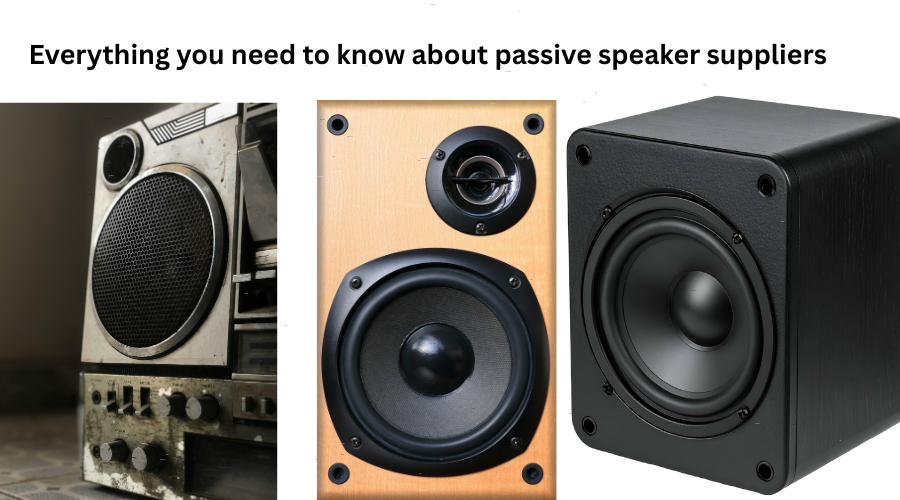
Passive speakers have no built-in amplifiers. They rely on an external amp or receiver to power the sound. This is not the same as active speakers, where the amplification is a part of the speaker unit. Therefore, passive speakers are usually lighter in design and much easier to manufacture. They are easy to install and popular in audio systems, for commercial use, or when a dedicated amp system is already in place or preferred for the home.
Why Some Buyers Still Prefer Passive to Active
Passive speakers give the buyer the possibility to select different amplifiers according to their specifications and price. The modular design is perfect for audio lovers and professionals who want more control over the whole audio rig than a single system.
What makes supplier choice so important?
Not all passive speakers are created equal, even if on paper the specs look similar. Different manufacturers use different quality components such as the driver material, crossover design, etc. This impacts the sound and durability. Supplier relationship problems can also be caused by stock swings, ambiguous specs or poor communication in bulk orders. Retailers and installers could be facing missed deadlines and unhappy customers further down the line.
Balancing the Cost of Choosing on Price Alone
Lower-priced speakers are often cheap at the source, resulting in distortion, lack of bass response, or early hardware failures. When customers consider the unit price, they might have to pay more for returns and more warranties at the end of the day.
Important considerations when selecting a supplier
Picking a supplier of passive speaker isn't just about finding the lowest price per unit. In the long run, a few factors are more significant.
Component Quality and Specifications
Inquire about driver materials, crossover parts, and cabinet construction from the suppliers. Better parts performance is expected to provide better clarity and product life, although the initial price may be slightly higher.
Manufacturing Consistency
Retailers who have to provide more than one unit will need consistency between them. With a good supplier, you won't have any trouble getting speakers with different tone variations in the same line of speaker products.
Certifications and Safety Standards
If you are looking at particular markets, check for related safety and quality approvals such as CE certification or compliance to RoHS standards. The certifications satisfy basic safety and environmental requirements that are accepted in many parts of the world.
Supplier Of Passive Speaker Reliability
Look for good communication, accurate lead times, and documented materials, such as spec sheets and test reports. Inquire about former bulk orders. A good supplier should be able to give a clear answer, even if there are a number of technical questions.
What Should I Ask Before Placing a Bulk Order?
Inquire whether a minimum order is required, what the lead time is, and whether they can provide samples before placing an order. Be sure to check return policies and guarantees, as well, because these protect those who want to purchase a batch.
Types of Passive Speakers Suppliers Typically Offer
Suppliers typically have multiple types of passive speakers of for a wide range of uses. These classifications enable buyers to select products to meet their specific needs.
Bookshelf Speakers
Bookshelf Speakers are small and widely used for home audio systems. They also offer a decent balance of quality to compact footprint and are popular among retailers whose space is limited.
Floor Speakers
These are larger speakers that deliver deeper, more powerful bass tones, and are often good for home theater or larger rooms. They tend to cost more, because of larger cabinets and more internal parts.
Commercial and Installation Speakers
These speakers tend to focus on deep bass response and may be built for use in restaurants, gymnasiums, or offices, rather than for other settings. Many suppliers in this market also offer weatherproof or ceiling-mounted options.
Customization Options to consider:
A number of suppliers provide customization to bulk customers to develop their own product line and/or to meet branding requirements and preferences.
Cabinet Finish and Branding
Popular customizations include cabinet colors and finishes, and the use of logos. This enables retailers to establish a unique product brand and not just sell generic, unbranded speakers.
Driver and Crossover Adjustments
Sometimes suppliers can change the driver size or crossover tuning for users with specific sound-type requirements. This typically assumes significantly higher orders for engineering design time.
Pricing Structures for Bulk Orders
Passive speaker pricing is based on drivers, cabinet material and order quantity. Sometimes, bulk orders can get you a better price per unit, but there may be minimum order quantities and customization requirements. It is also worth inquiring about tiered pricing, as some suppliers will have better rate lines for larger orders. This allows buyers to order strategically in advance, in quantity.
Compare total cost, not just unit price
Compare supplier quotes including shipping, packaging and customizations. Just because they are cheaper per unit does not mean that they always lead to lower total costs.
Shipping and Logistics Considerations
Bulk and weight are issues when shipping passive speakers, especially floor-standing ones. This affects shipping expenses and how materials are packed for transport to ensure there is no damage. Find out the policy on damage claims and packaging requirements from suppliers. A supplier who is knowledgeable about packaging will minimize the incidence of damage in transit, saving issues after shipment that can be time-consuming and costly to resolve.
Long-term supplier relationship
When retailers and installers are servicing an existing supply chain with a passive speaker vendor, they experience better pricing, inventory movement, and other interactions. A long-term supplier also gains an understanding of the buyer's unique product requirements, making future personalization orders or reorders faster and more convenient to handle.
After-Sales Support and Warranty Terms
Suppliers' duties do not stop once the goods leave the warehouse. The terms of the warranty and the response to after-sales service are very important, particularly if the unit is faulty or a complaint is made in the future.
Inquire from suppliers how they deal with warranties and what the paperwork is. Suppliers with simpler, quicker processes are generally longer-term business partners, particularly if the business handles customer-facing warranty situations.
Conclusion
Selecting the right supplier of passive speaker isn't just about the price of the units. Long-term business needs are shown by a supplier's component quality, manufacturing consistency, certifications, and customization options. Carefully researching questions and comparing suppliers results in improved products, reduced returns, and satisfied customers over the long term.
FAQS
What are some places to source passive speakers for a retail store?
The best way to purchase in bulk is to work with suppliers that manufacture audio equipment and offer wholesale pricing. Always verify component specifications and certifications before ordering a quantity.
How to buy passive speakers in wholesale at affordable rates?
Check the price of a couple of trusted sellers and enquire about a bulk discount. Tiered pricing can also help to lower per-order pricing at certain order volumes.
Who provides a supplier of passive speaker that includes customization?
Visit suppliers' websites that include the terms OEM or private label. For bulk buyers, many audio equipment manufacturers can provide custom finishes, customized branding, or driver adjustments.
Is there any supplier of passive speaker who offers bulk supply with customization at low prices?
Yes, some suppliers offer bulk purchase discounts as well as customized features such as finishes, branding, and driver tuning. It's very helpful to discuss minimum order quantities and custom orders clearly.
Featured Articles
In KTV rooms, private party rooms, small bars, and wedding entertainme...
READ FULLA truly breathtaking live performance relies on a clear and stable sou...
READ FULLA subwoofer generates the lowest frequencies in the sound system. Corr...
READ FULL