

Everything you need to know about Subwoofer Speaker Exporter
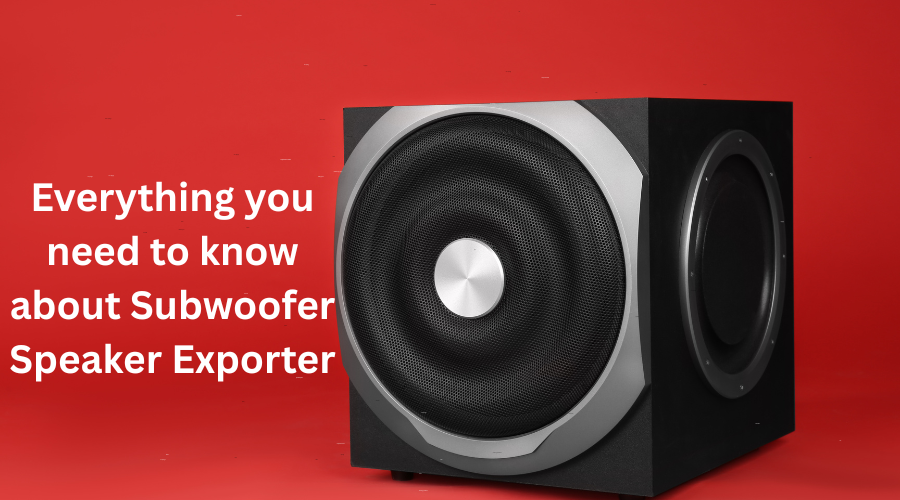
A subwoofer generates the lowest frequencies in the sound system. Correctly understanding this component is important in home theater, car audio, and live sound. As a buyer, you should know the subwoofer's specifications and how to choose the right exporter of subwoofer speaker.
Difference between a subwoofer and other speakers
A subwoofer is a speaker designed to play low frequencies below 200Hz. For standard speakers, accurately reproducing this range cleanly is more difficult, as it takes more cone movement and pressure to push deep bass.
Subwoofers come with max-sized drivers, and their own amplifiers or crossovers break out this frequency range. With this specialization, the remaining parts of a speaker system will not be drowned out by bass frequencies.
Key Subwoofer Specifications Buyers Should Know
Driver Size
Drivers are typically available in the 8-18” range. For a smaller audio setup, like a home theatre or car stereo, 8-10 inch woofers are a great choice. These are ideal for use in live sound reinforcement applications or high-output home theaters between 15" and 18".
Power Handling
Power handling is how much power a Subwoofer can handle. Consumer subwoofers are typically between 200 watts and 1000 watts RMS. Professional subwoofers are generally 500 watts RMS to 2,000 watts RMS, with peaks up to 4,000 watts.
Frequency Response Range
The lowest frequency a subwoofer can reproduce is around 20Hz, and the highest is around 200Hz, with the manufacturer's design and driver being the determining factors. A lower frequency extension (even closer to 20Hz) provides more bass but may require a larger enclosure and more power to do it "cleanly".
Enclosure Types and Their Effect on Sound
Sealed Enclosures
The sealed enclosures feature a completely enclosed cabinet design. This results in deeper and more controlled bass with a steeper drop-off below the tuned frequency. If high output matters little and precision is a major concern, the sealed design is perfect for a studio or home theater system.
Sealed vs. Ported Enclosures
Enclosures with ports have a vent or port to improve the low frequencies . This design gives lower accuracy and higher bass output at lower power levels. This is why this design is used for car audio and live sound applications where bass output is more important than absolute accuracy.
Bandpass Enclosures
Bandpass enclosures use a mix of ported and sealed chambers that restrict the driver's frequency range. The bass tone is extremely strong and tight, and they are less common in live sound and home audio applications than in competitive car audio configurations.
Active vs. Passive Subwoofers
Active Subwoofers
Active subwoofers include an integrated amplifier designed for the specific driver. This makes the setup easier, as there is no need to adjust the external amplifier. This is the reason why active designs have ruled the home theater and consumer electronics market.
Passive Subwoofers
Passive subwoofers need an external amplifier. This complicates setups but gives users greater flexibility in setting amplifier power levels to match the demands of a venue or application. Passive designs are still popular in professional live sound and car audio applications.
Cabinet Materials and Build Quality
Wood Cabinet Construction
Most subwoofers use either MDF or plywood cabinets. MDF has a good density and cost efficiency for consumer products. For touring and heavy commercial applications, where cabinets are moved repeatedly, a higher strength-to-weight ratio is more important, which plywood provides.
Reinforcement and Bracing
Internal bracing minimizes cabinet resonance by eliminating wall vibration with the driver, leading to more accurate sound. Discuss the internal bracing design with your exporter because it matters more for sound than the material.
Connection and Input Options
Line-level inputs and speaker-level inputs
Many consumer subwoofers have both speaker-level and line-level inputs to give you flexibility in connecting them to your amplifier or receiver. Professional subwoofers usually use XLR and Speakon connectors for reliable, pro connections in live sound situations.
Options for Wireless Subwoofer
Many consumer subwoofers have a wireless option that lets you place the subwoofer without a cable running to the larger amplifier or receiver. It could be a convenience for home theater buyers who are more concerned with minimal cable clutter than audio precision.

The difference between subwoofers for specific uses
Home Theater Subwoofers
Home theater subwoofers aim at producing deep, controlled bass for movies and music throughout the moderate range. Smaller ported or sealed models that are 10-12 inches in size are good for residential rooms.
Car Audio Subwoofers
Car audio subs are limited by space and must operate effectively in a car's sound field. This is often a section dominated by ported and bandpass enclosures, as those buyers are often seeking the greatest amount of output within a limited enclosure.
Live Sound Subwoofers
Live sound subwoofers must deliver ground bass at high power when required for use in large sound fields, without distortion. In this application, larger 15"-18" ported designs are more prevalent and are frequently used in stacked or grouped applications.
Questions for an Exporter of subwoofer speaker
Quality and Manufacturing Issues
Please inquire about driver material, magnet type and voice coils. Both of these are important for loudness and durability in heavy use. Please provide proof of power handling ratings, production.
Certification and Compliance
Ask about the certifications the exporter's items may have for the target market (CE, FCC, RoHS, etc.). Some of these certifications are significant in many countries for customs clearance, retail compliance, and other reasons.
Sample and Testing Process
Always order sample units first. A sample test under real conditions verifies the actual output, frequency response, and build quality, as specified by the manufacturer.
Some points that you should consider if you're ordering wholesale subwoofers:
Cost Factors Beyond Unit Price
Active subwoofers come in a variety of cabinet materials, driver quality, and amplifier components, and these factors affect unit cost. When evaluating the quotes, always enquire about the specific differences between the cheaper quote and the more expensive. Do not take quotes as one-size-fits-all.
Minimum Order Quantity
Minimum order quantities are based on the exportability and complexity of the product. Typically, the stock subwoofer designs have a lower MOQ than the custom cabinetry designs and private label projects. Make sure the MOQ terms are well defined before making sourcing decisions.
Shipping and Packaging Considerations
Heavy engraving is required for subwoofers, which are bulky products and need stiff packaging to avoid damage in shipment all over the world. Ask your exporter about their standard export packaging, such as corner protection, foam padding, and palletized shipment for container loads.
Get freight cost estimates early, because a subwoofer's weight will be a bigger cost factor than other audio items. Consider this factor as part of total landed cost when deciding order quantities.
Establishing a long-term relationship with your exporter
When you locate an excellent exporter of subwoofer speaker with consistent value for repeat ordering, it is worth maintaining the relationship. As you place more orders, a supplier who understands your requirements can reduce onboarding time and give you more attention when demand is high.
A supplier relationship review is required periodically as material prices and production capacity evolve. Confirming your response will protect your margins as you grow your business.
Conclusion
Selecting the perfect exporter of subwoofer speaker requires more than just a cost evaluation. All three components affect the subwoofer's performance and customs compliance: driver specification, enclosure design, and certification compliance. Before placing a large-quantity order, ask for samples and technical documentation.
FAQS
Where to find speaker subwoofers in bulk online?
You can easily do this through any reputable trader platform or by contacting trusted audio equipment exporters.
What should I look for when choosing the right supplier for subwoofer speakers?
Ask for specification sheets, certifications, and samples prior to placing a bulk wholesale order.
What are the various ways to get subwoofer speakers for the business?
Work with an exporter of subwoofer speaker that provides clear technical specifications and transparent pricing.
What is the difference between sealed and ported subwoofer enclosures?
Sealed enclosures give a tighter output with more accurate bass, ported enclosures give a louder enclosure output with less input power.
Do subwoofers have different certifications in different markets?
Yes. Please confirm CE regulations, FCC or RoHS standards for your destination market before place an order.
Featured Articles
In KTV rooms, private party rooms, small bars, and wedding entertainme...
READ FULLA truly breathtaking live performance relies on a clear and stable sou...
READ FULLA subwoofer generates the lowest frequencies in the sound system. Corr...
READ FULL